

In a world where delivering aid can feel like navigating a maze, drones swoop in like superhero sidekicks. These high-tech gadgets aren’t just for capturing breathtaking selfies or racing through the skies; they’re revolutionizing humanitarian efforts. Imagine a fleet of buzzing drones zipping over disaster zones, delivering food, medicine, and hope faster than you can say “where’s my pizza?”
Overview of Drones for Humanitarian Aid
Drones significantly enhance the efficiency of humanitarian aid operations. These unmanned aerial vehicles, equipped with advanced technology, deliver supplies to remote or inaccessible regions. Organizations utilize them to transport food, medical supplies, and other critical items during emergencies.
Key advantages of drone usage include rapid deployment. Drones can reach affected areas within hours, providing immediate relief to those in need. Additionally, they reduce risks associated with traditional delivery methods, such as roadblocks and damaged infrastructure.
Drones also serve vital roles in mapping and surveillance. High-resolution cameras on drones allow teams to assess damage and identify areas requiring assistance. Data collected through aerial imagery supports logistics planning and resource allocation.
Various humanitarian organizations adopt drones for different applications. The World Food Programme, for instance, leverages drones to deliver food assistance in disaster zones. Similarly, UNICEF employs them to monitor health conditions and distribute vaccines in hard-to-reach locations.
Challenges exist when deploying drones in humanitarian contexts. Regulations around airspace and privacy may hinder operations. Training personnel to operate drones safely and effectively is crucial for success.
Collaboration among stakeholders fosters innovation in drone applications. Partnerships between technology companies and humanitarian organizations lead to enhanced capabilities. Ongoing research aims to improve drone design for more effective support during crises.
Overall, drones represent a powerful tool for humanitarian efforts, driving improvements in the speed and effectiveness of aid delivery. The potential for continued advancement makes them indispensable in future disaster response scenarios.
Benefits of Using Drones
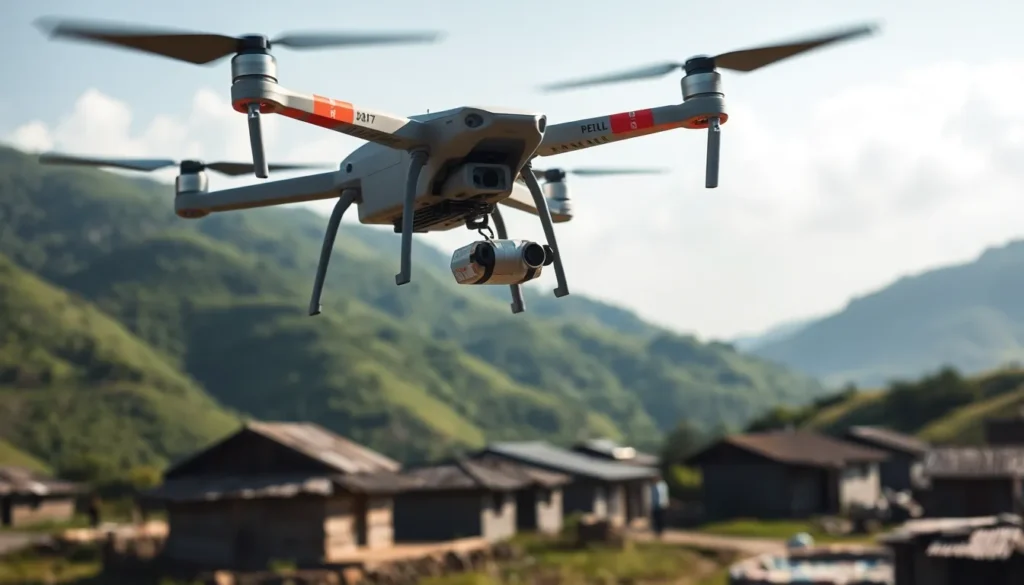
Drones offer significant advantages in humanitarian aid efforts, transforming the delivery of essential supplies. They enhance operations with their unique capabilities.
Speed and Efficiency
Drones deliver supplies rapidly, often reaching remote areas in minutes. They minimize delays that traditional delivery methods face, even in challenging terrains. In urgent scenarios, these devices can transport medicine and food to those in need almost instantaneously. Many organizations report increased logistical efficiency by utilizing drones. Monitoring and surveying areas from above provides real-time data that assists in planning. Overall, drones drastically cut down response times, improving access to vital resources.
Cost-Effectiveness
Using drones notably reduces operational costs for humanitarian missions. Transportation expenses decrease significantly with drones compared to ground vehicles or helicopters. Organizations save on fuel, maintenance, and manpower while increasing their aid reach. Many projects demonstrate that drones can carry payloads that traditional methods can’t affordably handle. Cost savings enable more resources to be allocated towards essential services rather than logistics. Thus, drones play a crucial role in optimizing budget efficiency in crisis response efforts.
Types of Drones Utilized
Drones for humanitarian aid come in various types, each optimized for specific tasks. Understanding these types enhances the effectiveness of aid delivery.
Fixed-Wing Drones
Fixed-wing drones feature a design similar to small airplanes, allowing them to cover large distances efficiently. They excel in long-range missions, transporting supplies to remote locations quickly. Fixed-wing drones can fly at higher altitudes and maintain stability over longer periods. Their ability to carry heavier payloads makes them ideal for delivering food and medical supplies to disaster-stricken areas. Organizations have successfully employed fixed-wing drones for mapping and surveillance, collecting vital data in real-time. With advancements in technology, these drones increasingly demonstrate greater endurance, extending their utility in humanitarian operations.
Multi-Rotor Drones
Multi-rotor drones, often recognized for their rotor setup, provide exceptional maneuverability and precision. They excel at short-range deliveries, navigating tightly packed urban environments or difficult terrains. Speed remains a notable advantage; these drones can quickly reach affected populations with critical supplies. Multi-rotor drones are lightweight and capable of transporting smaller payloads, making them suitable for delivering medicines or health kits. Many humanitarian organizations utilize these drones for assessment and monitoring, ensuring timely responses to emerging crises. Their user-friendly controls and rapid deployment capabilities enhance their role in urgent humanitarian missions.
Case Studies
Drones have showcased remarkable applications in humanitarian aid campaigns. They stand out in their roles during disaster response and medical supply delivery.
Disaster Response
Drones significantly accelerate response times in disaster-stricken areas. For instance, in the aftermath of earthquakes or floods, organizations utilize drones not only for delivering supplies but also for conducting aerial surveys. These drones quickly map affected regions, enabling teams to assess damage accurately and identify critical needs. In 2017, during Hurricane Harvey, volunteers deployed drones to monitor rising waters and locate stranded individuals, proving vital in rescue operations. The data collected helped first responders prioritize their efforts and allocate resources efficiently.
Medical Supply Delivery
Medical supply delivery through drones has transformed healthcare access in remote communities. In Rwanda, a drone delivery service transports blood and medical supplies to facilities in hard-to-reach areas. The program, launched by Zipline, allows for rapid replenishment of vital resources, minimizing delays in treatment. Each drone mission cuts delivery times from hours to mere minutes. In addition, during the COVID-19 pandemic, drones enabled safe transport of vaccines to rural populations, demonstrating the impact of technology in addressing public health challenges. These efforts underscore the potential of drones to enhance medical logistics and save lives.
Challenges and Limitations
Drones face several challenges in humanitarian aid implementation, most notably regulatory hurdles and technical limitations.
Regulatory Hurdles
Governments have established regulations that often restrict drone operations. These regulations can vary significantly between countries, complicating cross-border humanitarian efforts. Required permits and airspace restrictions frequently delay deployment, hindering timely aid delivery. Privacy concerns also arise, as communities may oppose surveillance capabilities. Compliance with these laws necessitates coordination among stakeholders, which can slow down operations further. Additionally, varying local regulations create confusion around operational protocols, forecasting the need for training and clear communication.
Technical Limitations
Technical limitations hinder drone efficacy in humanitarian settings. Payload capacities often restrict the volume of supplies that drones can transport, which can be a significant issue during large-scale disasters. Battery life poses another challenge, as many drones can only operate for limited timeframes before needing to recharge. Weather conditions severely impact drone performance, with strong winds and rain posing risks to stability and safety. Connectivity issues, particularly in remote or disaster-stricken areas, may obstruct real-time data transmission. Further advancements in drone technology remain critical for overcoming these obstacles and enhancing humanitarian operations.
Future of Drones in Humanitarian Aid
Technological advancements continuously shape the future of drones in humanitarian aid. Emerging innovations promise enhanced aerial capabilities, enabling faster and more effective delivery of critical supplies. Automation stands to revolutionize operations, allowing drones to execute missions with minimal human intervention. Fresh developments in machine learning and artificial intelligence improve navigation and data processing, making drones smarter and more efficient in disaster response scenarios.
Organizations increasingly prioritize collaboration to address regulatory challenges and optimize drone use. Partnerships among governments, NGOs, and private sectors facilitate the sharing of best practices and resources. Many humanitarian groups advocate for standardized regulations, minimizing hurdles and expediting deployment efforts. Advocacy is essential to ensure that drone technology remains accessible and adaptable to various operational contexts.
New applications for drone technology continue to emerge. For example, advancements in drone swarm technology allow coordinated efforts, amplifying the delivery capacity during crises. Consequently, drones equipped with advanced sensors can provide detailed situational awareness, improving damage assessments and resource allocation. Enhanced communication systems allow for real-time data transmission, addressing connectivity issues in remote regions.
In the realm of medical logistics, robotics become a critical factor, increasing efficiency in supply chains. Vaccination distribution benefits significantly from drone assistance, ensuring that vaccines reach rural populations quickly and efficiently. These innovations highlight the growing importance of drones in improving health outcomes during emergencies.
Drones’ future in humanitarian aid promises numerous potential benefits, emphasizing rapid delivery, cost reductions, and safety improvements. Enhanced technological capabilities, coupled with collaborative approaches, will solidify drones’ roles as indispensable assets in humanitarian operations. As advancements progress, the impact on delivery systems and overall mission effectiveness will grow significantly.
Drones are reshaping the landscape of humanitarian aid by providing innovative solutions for rapid response and resource delivery. Their ability to navigate challenging terrains and reach remote areas is crucial in times of crisis. As technology continues to advance, the potential for drones to enhance operational efficiency and effectiveness grows.
Collaboration among various stakeholders will be essential in overcoming existing challenges and maximizing the impact of drone technology. With ongoing research and development, drones are set to become even more integral in humanitarian missions, ensuring that aid reaches those in need swiftly and safely. The future of humanitarian aid is bright with drones at the forefront of delivering hope and assistance.